Terminology Cheat Sheet for Normalization & Regularization
Oct 22, 2025· ·
1 min read
Sang-A Ahn
1. Normalization (Min-Max Scaling)
- Linearly rescales each feature into the 0–1 range using its minimum and maximum values.
- When to use:
- Effective when the distribution is fairly even and extreme outliers are rare.
- Stabilises training for models that are sensitive to feature scale (neural networks, distance-based models).
- Needs to be recomputed whenever new min/max values appear.
- Formula
$$x’ = \frac{x - x_{\min}}{x_{\max} - x_{\min}}$$
2. Standardization (Z-score Scaling)
Shifts data to have mean 0 and standard deviation 1.
When to use:
- Works well when data is approximately Gaussian.
Formula
$$z = \frac{x - \mu}{\sigma}$$
Both normalization and standardization are part of data preprocessing. They help models converge faster and more stably by presenting inputs on comparable scales.
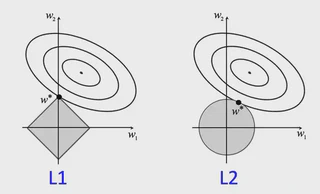
3. Regularization
- Goal: prevent overfitting—when a model memorises the training data and fails on unseen samples.
- How it works:
- Adds a penalty to the model’s parameters during training (L1, L2, Elastic Net, Dropout, etc.).
- Controls model complexity and directly improves generalization.
4. Generalization
- The ultimate goal of machine learning: achieving high accuracy on unseen data.
- Evaluated via validation/test performance rather than training metrics.
- Relationship summary:
- Regularization is a primary strategy for better generalization (model-level control).
- Normalization/Standardization indirectly support generalization by making optimisation easier (data-level support).
